
How Do You Prevent Green Algae Buildup on Composite Fences in Shaded Vancouver Yards?
TL;DR: In Vancouver’s shaded, wet yards, green algae forms when moisture + organic film (pollen/dirt) sit on the fence. Prevent it by improving airflow/drainage, keeping soil and vegetation off the boards, and doing a simple rinse-and-wash routine—especially in spring.
Vancouver homeowners deal with a perfect algae recipe: rain, dense evergreen shade, north-facing side yards, and plenty of organic debris (pollen, dirt, leaf litter). The good news is that most “green algae” on composite is a surface issue—cleanable and preventable—so you can keep your fence looking sharp without turning it into a weekend chore.
If you’re planning a new fence that’s built for our climate, start with fence installation in Vancouver (pricing, timeline, and what actually drives maintenance long-term). If you’re comparing contractors, this practical overview helps: fence contractors in Vancouver (composite fences & gates).
What “Green Algae” Is (and Why It Shows Up on Composite)
Green algae is a moisture-loving growth that thrives on damp surfaces—especially where sunlight is limited. Composite fencing doesn’t rot like wood, but algae can still grow on the thin organic “film” that builds up from pollen, dust, tree sap mist, and soil splash-back. Manufacturers commonly recommend removing that film with a simple soap-and-water wash rather than letting it sit for months (see Trex care guidance here: Trex care & cleaning).
In Metro Vancouver, the highest-risk setups usually include: tight side yards, fences behind hedges, sprinkler overspray, poor drainage at the bottom rail, and garden beds that touch the boards.
Quick Facts for Vancouver Homeowners
- Most algae starts at the bottom (soil splash + trapped moisture).
- Shade matters more than “material”—even vinyl can go green in deep shade.
- Composite doesn’t need staining, but it still benefits from a seasonal rinse.
- Airflow is a real prevention tool—semi-private designs can reduce damp stagnation.
- Spring is the best reset before the yard grows in and moisture gets trapped again.
Composite Fence Definition (Plain Language)
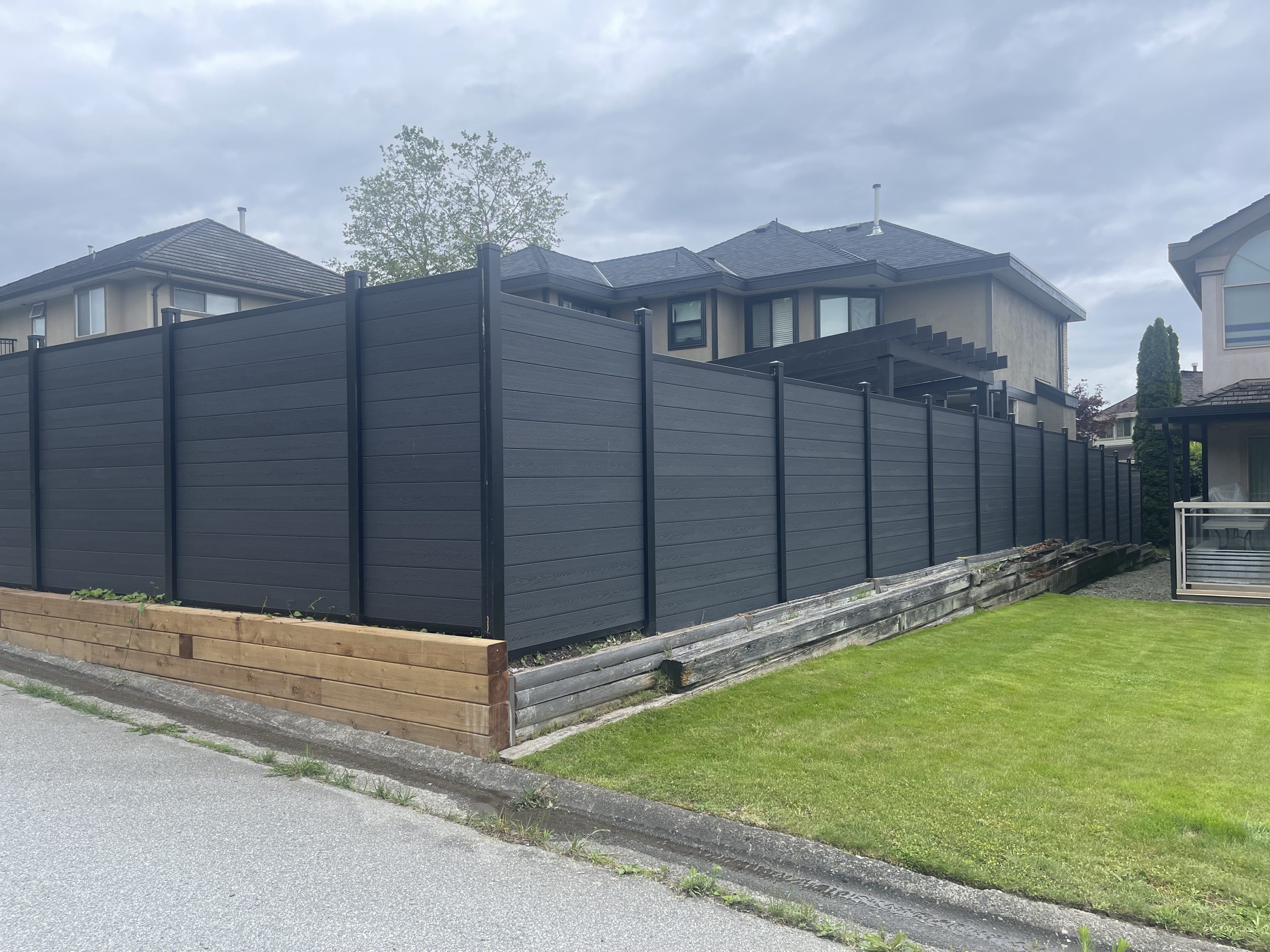
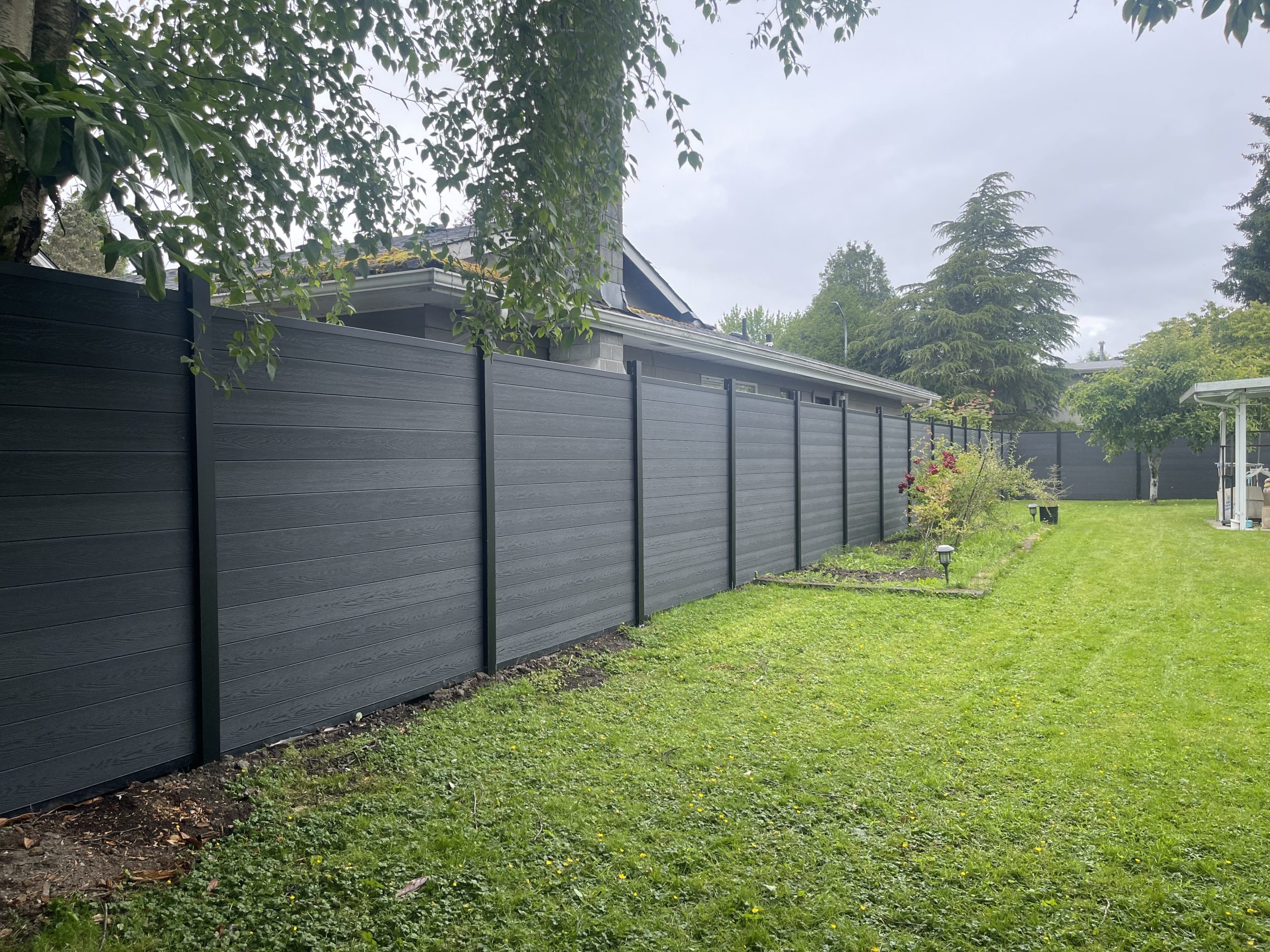
Composite fencing uses engineered boards (typically wood fibres + polymers) designed to resist rot, warping, and the stain/paint cycle that Vancouver rain forces on cedar. That’s why many homeowners choose composite when they want privacy and straight lines with low ongoing upkeep. For an overview of MapleStar’s panel systems and options, see Composite Fencing Vancouver (MapleStar Fencing).
Pros & Cons in Shaded Yards (Honest Version)
Pros
- No rot and far less warping compared with wood in damp soil conditions.
- No staining cycle—maintenance is mostly rinse/wash.
- Surface cleaning works because algae is usually on the film, not “inside” the board.
Cons
- Shade can still cause green buildup if debris and moisture sit on the surface.
- Bad drainage/details can defeat good materials (soil contact, trapped leaves, poor slope).
- Incorrect cleaning methods (too much pressure, harsh chemicals) can dull the finish over time.
The Vancouver Prevention System (What Actually Works)
1) Keep the Bottom of the Fence Dry and Clear
If algae is your recurring issue, start at ground level. Most green buildup begins where moisture lingers and soil splashes.
- Maintain a small clearance between soil/mulch and the bottom board (avoid constant contact).
- Use a gravel strip or stone border along the fence line to reduce splash-back.
- Redirect downspouts so water doesn’t dump beside the fence.
- Avoid storing items tight to the fence (planters, bins, stacked lumber) that block airflow.
2) Trim Back Vegetation to Increase Light and Airflow
In shaded Vancouver yards, hedges and shrubs often create a “wet tunnel” effect. Even small changes help:
- Trim hedges 6–12 inches back from the fence line where practical.
- Remove vines that trap moisture against the boards.
- Keep ferns/groundcover from growing into the bottom rail zone.
3) Fix Sprinkler Overspray (It’s a Quiet Algae Accelerator)
If sprinklers hit the fence daily, algae will come back fast—especially in shade. Adjust heads so they water the lawn/bed, not the fence face. This alone can cut recurrence dramatically.
4) Choose a Design That Breathes (If You’re Rebuilding)
If your yard is permanently shaded (North Shore-style canopy, deep side yard, tall hedges), consider a design that improves airflow without sacrificing privacy. For example, semi-private composite fence panels can reduce moisture stagnation in tight spaces while still screening neighbours.
If full privacy is the priority, start here for panel planning: composite fence installation guidance (Vancouver). If you’re replacing wood because maintenance is getting expensive, this is the most common homeowner path we see: why cedar fences get expensive in Vancouver (10-year reality).
Safe Cleaning Routine (Fact-Checked and Practical)
Baseline rule: remove the “food source” (pollen/dirt film) before algae gets established. Major manufacturers commonly recommend a hose rinse plus warm, soapy water and a soft brush for routine cleaning (example: Trex care & cleaning).
Step-by-Step: Spring Wash (Best Time in Vancouver)
- Dry brush first: sweep off pollen, dust, and leaf debris so you’re not scrubbing mud.
- Rinse top-down: use a garden hose to wet the surface and loosen film.
- Wash: warm water + mild dish soap, applied with a soft bristle brush. Scrub along the board grain texture.
- Rinse thoroughly: leftover soap can attract dirt, which feeds future growth.
- Repeat on shaded sections: north-facing or hedge-backed areas usually need extra attention.
For Stubborn Green Patches (Use the Right Cleaner)
If the fence is heavily shaded and you’re seeing recurring green staining, a composite-safe cleaner that includes a mildewcide can help (Fiberon notes improving airflow/drainage and using appropriate cleaners for mold/mildew scenarios. Always test any cleaner on a small, hidden area first.
Avoid harsh “shortcut” chemistry: chlorine bleach can damage finishes and landscaping if misused. If you’re unsure what’s safe for your specific panel, keep it simple (soap/water) or ask your installer for product-specific guidance before applying stronger solutions.
Pressure Washer: Use Caution (Only If You Know What You’re Doing)
Pressure washing can be effective, but it’s also how people accidentally rough up surfaces. If you choose to use one:
- Use a wide fan tip, keep distance, and test first.
- Never “needle blast” seams or edges.
- If algae is light, the hose + soap method is usually safer and enough.
What It Costs (DIY vs Pro) — Vancouver Planning Ranges
DIY seasonal wash: typically $25–$60 for basic supplies (soap, soft brush, hose nozzle).
Pro cleaning (typical residential runs): often $250–$600 depending on access, length, landscaping sensitivity, and whether algae treatment is required. Tight side yards, steep slopes, and delicate gardens increase labour.
Prevention detail upgrades (during install): adding drainage/gravel border details or rebuilding problem sections is site-specific—this is where a quick quote is the fastest way to get a real number.
Spring Promotion: If you’re considering replacing a problem fence (especially one trapped in shade and moisture), MapleStar is offering 20% off for Spring on qualifying composite fence projects. Call/Text (778) 318-8578 to get a quote based on photos and layout details.
DIY vs Pro: When to Call a Vancouver Fence Specialist
DIY cleaning is fine for most homeowners. Hire a pro (or at least get advice) if:
- You have a long shaded run where algae returns quickly and you suspect drainage or design issues.
- Your yard is sloped or the fence sits near retaining walls (moisture and measured height get complicated).
- You’re planning a new fence and want to prevent the “green bottom rail” problem from day one.
- You need a gate that stays aligned (common failure point in wet climates). Start here: composite fences & gates (Vancouver).
Local Vancouver Notes: Bylaws, Height, and Dig Safety
Fence height: Vancouver commonly allows fences without a permit when they are 4 ft or less in the front yard perimeter and 6 ft or less along side/rear yards (always confirm for your lot and zone): City of Vancouver fence guidance.
If you want the practical “front vs backyard” breakdown in plain language, see: max fence height in Vancouver (front yard vs backyard). If you’re unsure about permits, start here: Do I need a permit to build a fence in Vancouver?
Dig safety (critical): If any part of your fence project involves digging or posts, arrange utility locates before excavation. BC 1 Call exists specifically for this: BC 1 Call. FortisBC also emphasizes clicking/calling before you dig for homeowner safety: FortisBC digging safety.
Why MapleStar Works Well for Shaded, Wet Vancouver Yards
Many “green fence” problems are not just cleaning problems—they’re detail problems: soil contact, trapped debris, poor airflow, and layouts that keep the bottom wet. MapleStar designs composite systems for Metro Vancouver’s rain, slopes, and coastal conditions, with installer-led execution and consistent materials (see: Composite Fence Installation (Services)).
For contractor comparisons and real Vancouver-focused guidance, use this page as your baseline: Fence Contractors Vancouver: Composite Fences & Gates.
If you want to verify MapleStar locally, you can view our MapleStar Fencing Google Business Profile or check recent customer reviews on Google.
FAQ (Vancouver Homeowner Questions)
1) Does composite fencing “cause” algae?
No—shade, moisture, and organic film cause algae. Composite just gives algae a surface to sit on (like any fence). Routine rinsing prevents most buildup.
2) How often should I clean a composite fence in Vancouver?
For shaded yards, a light rinse during the wet season and a spring wash is usually enough. If you have heavy tree cover or sprinkler overspray, you may need more frequent cleaning.
3) Can I use bleach on a composite fence?
It’s better to start with mild soap and water. Strong chemicals can risk finish issues and harm landscaping. If you need more power, use a composite-safe cleaner and follow product instructions.
4) Will a pressure washer damage composite boards?
It can if used aggressively. If you’re not experienced, the hose + soap + soft brush method is safer for routine cleaning.
5) Why is the bottom of my fence always greener?
That area gets splash-back from rain, sits in damp air, and collects debris. A gravel strip, clearance from soil, and better drainage make a big difference.
6) Do darker fence colours hide algae better?
They can make light green staining less obvious, but prevention is still about keeping the surface clean and dry where possible.
7) Can changing fence style help prevent algae?
Yes. In tight side yards, semi-private designs can improve airflow and reduce moisture stagnation, which helps reduce recurrence.
8) If I’m replacing a fence, what should I do first?
Confirm your layout and any bylaw/strata constraints, then get a quote based on photos and measurements. Start with Fence Installation Vancouver to understand cost drivers and timelines.
Spring 20% Off — Call for a Quote
If your shaded yard keeps turning fences green (or your wood fence is stuck in a stain/repair loop), composite is usually the long-term Vancouver solution. MapleStar is offering 20% off for Spring on qualifying projects. Call/Text (778) 318-8578 or request a quote here: Contact MapleStar Fencing.
Disclaimer: This article provides general maintenance guidance for Metro Vancouver homeowners. Always follow your specific product’s care instructions, test cleaners on a small area first, and confirm fence height/placement rules with your municipality or strata before construction. For any digging, arrange utility locates in advance.
