
The Push Test: Did Your Vancouver Cedar Fence Actually Survive the Winter?
TL;DR: After a wet Vancouver winter, your cedar fence may look fine from the kitchen window but already be failing at the post base. If a fence post moves more than about 2 inches when you push it by hand, or the wood near the soil line feels soft, punky, or hollow, you should treat it as a safety issue—not a cosmetic repair.
A composite fence is a low-maintenance privacy fence system made with composite boards and a structural post/channel system. For Vancouver homeowners dealing with rotting cedar posts, Maple Star Fencing recommends replacing repeated wood failures with an aluminum post + composite board system that does not rot like timber buried in wet soil.
Failed the Push Test? Request a free urgent fence inspection before the next wind event, backyard party, or neighbour dispute.
Why May Is the Right Time to Check Your Fence
In Metro Vancouver, May can be deceptive. The sun comes out, the lawn dries at the surface, and homeowners assume the fence made it through winter. The problem is below the visible boards. Cedar posts spend months sitting in damp soil, splashback, shade, and poor drainage. The fence may still stand upright, but the load-bearing post base can already be weakened.
This matters because most fence failures do not start in the middle of a clean cedar board. They start at the post base, where water, soil contact, fungi, and movement attack the part of the fence that carries the load. Once the post loses stiffness, the panels begin leaning, gates drag, fasteners loosen, and the whole fence line becomes easier to push over.
If your fence is older, shaded, stained black near the bottom, leaning toward a neighbour, or sitting beside a wet side yard in East Vancouver, Kitsilano, Mount Pleasant, Renfrew-Collingwood, Burnaby, Richmond, or Coquitlam, this test is worth doing before summer.
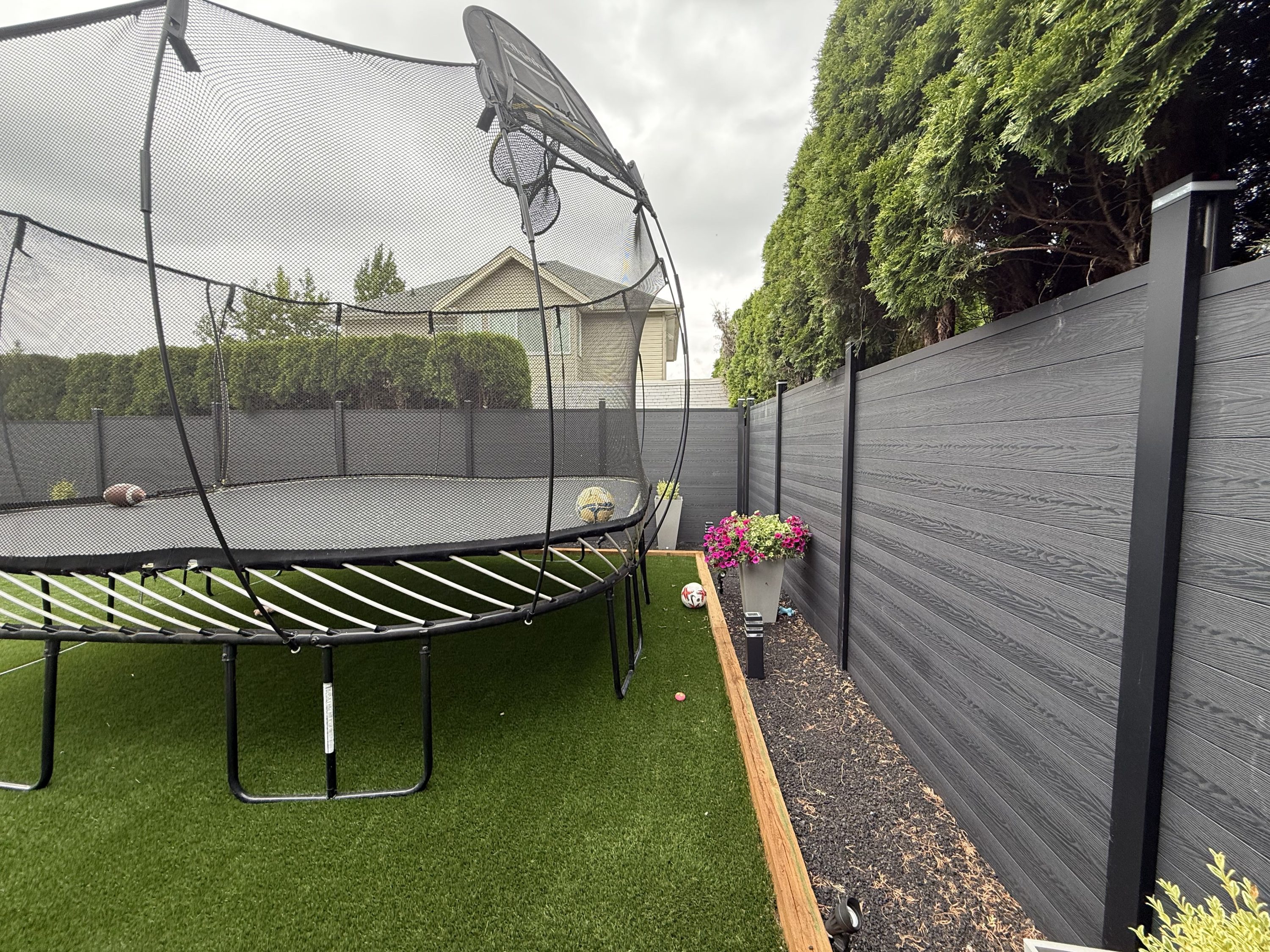
The 60-Second Push Test for Rotting Fence Posts in Vancouver
Do this test gently. The goal is not to break the fence. The goal is to identify whether the structure is still stiff enough to be trusted.
- Pick three posts: test one corner post, one gate post, and one middle post along the longest fence run.
- Stand on your side of the fence: place both hands around chest height on the post or near the panel beside the post.
- Push steadily: apply firm, controlled pressure for 2–3 seconds. Do not ram the fence.
- Watch the movement: if the post moves more than about 2 inches, the post or footing may be compromised.
- Check the base: look at the wood where it meets soil, mulch, gravel, or concrete.
- Probe gently: use a screwdriver or key. If the wood feels soft, spongy, or crumbles, rot has likely advanced.
- Check the sound: a hollow or dull sound near the base is a warning sign.
Safety note: If the fence moves easily, do not keep testing it. Do not let children climb on it, lean bicycles against it, or use it as support during yard work. Book an inspection and decide whether the post can be repaired or the fence should be replaced.
What Counts as a Failed Push Test?
| What You See | Likely Meaning | Recommended Action |
|---|---|---|
| Post moves less than 1 inch | Usually normal minor flex | Monitor; check again after heavy rain |
| Post moves 1–2 inches | Possible footing movement or early rot | Inspect base, gate alignment, and soil drainage |
| Post moves more than 2 inches | Likely structural failure risk | Book fence inspection before repair decisions |
| Wood is soft at soil line | Rot is active at the critical load point | Repair may be temporary; replacement may be smarter |
| Gate post moves or latch no longer lines up | Gate load is pulling the structure out of square | Evaluate post, hinges, frame, and adjacent panels |
Why Vancouver Winters Destroy Cedar Fence Posts
Cedar performs well when it can dry. Vancouver makes that difficult. Long rain cycles, shaded side yards, wet leaves, poor airflow, and soil contact keep the lower section of a wood fence damp for months. Once the post base stays wet, the wood fibres lose strength and decay becomes harder to stop.
The visible boards may still look acceptable, especially if they were stained recently. That creates a false sense of security. But if the buried or ground-contact portion of the post is deteriorating, the fence can fail suddenly under wind load, gate movement, or impact.
This is why a cedar fence can look “good enough” in April and become a problem in June. Dry weather hides the issue visually. It does not rebuild the post base.
For a deeper cost comparison, see our guide to cedar fence maintenance cost in Vancouver. If you are comparing materials before replacing the fence, read composite vs vinyl vs wood fence options for Vancouver’s wet climate.
Fence Repair vs Replace: When Is Repair Still Worth It?
Not every failed post means the whole fence must be rebuilt. But many Vancouver cedar fences are repaired too late, too cheaply, or too narrowly. Replacing one visible post while leaving five weak posts beside it can create a short-term fix and a second service call later.
Repair may make sense when:
- Only one post is loose and the rest of the fence is straight.
- The panels are relatively new and still structurally sound.
- The rot is localized and there is no widespread softness at the base.
- The fence is not on a shared strata perimeter or high-risk neighbour line.
- The gate is not sagging, dragging, or pulling the post out of alignment.
Replacement is usually smarter when:
- Multiple posts fail the push test.
- The fence leans across a long run.
- The bottom rails or lower boards are soft, dark, or splitting.
- The gate post moves when the gate opens or closes.
- You already paid for repeated cedar repairs in the last few years.
- The fence borders a neighbour’s garden, driveway, walkway, lane, or shared strata area.
If your fence is already at the “repair or replace” stage, start with our fence installation in Vancouver guide. It explains install timelines, access planning, composite fence options, and what information we need for a written quote.
The Real Risk: A Rotten Fence Is Not Just Ugly
A weak fence creates more than curb appeal problems. If the post base is rotten, the fence can fall into a neighbour’s yard, damage landscaping, crush plants, hit a parked item, block a walkway, or create a safety issue for children and pets. The legal headache often starts after the collapse: who owns the fence line, who ignored the warning signs, who pays for damage, and whether the repair was reasonably handled.
For homeowners, the practical rule is simple: if you can move the fence by hand, wind can move it harder. If a child can shake it, it should not be treated as safe. And if a gate is dragging because the post is loose, the fence is already telling you the structure is tired.
Maple Star’s Fix: Aluminum Posts + Composite Boards
Maple Star Fencing does not approach a rotten cedar fence as a “swap the bad board” problem. In Vancouver, the main failure point is usually the structure: posts, footings, drainage, gate load, and material choice. That is why our preferred long-term replacement system uses aluminum posts with composite boards.
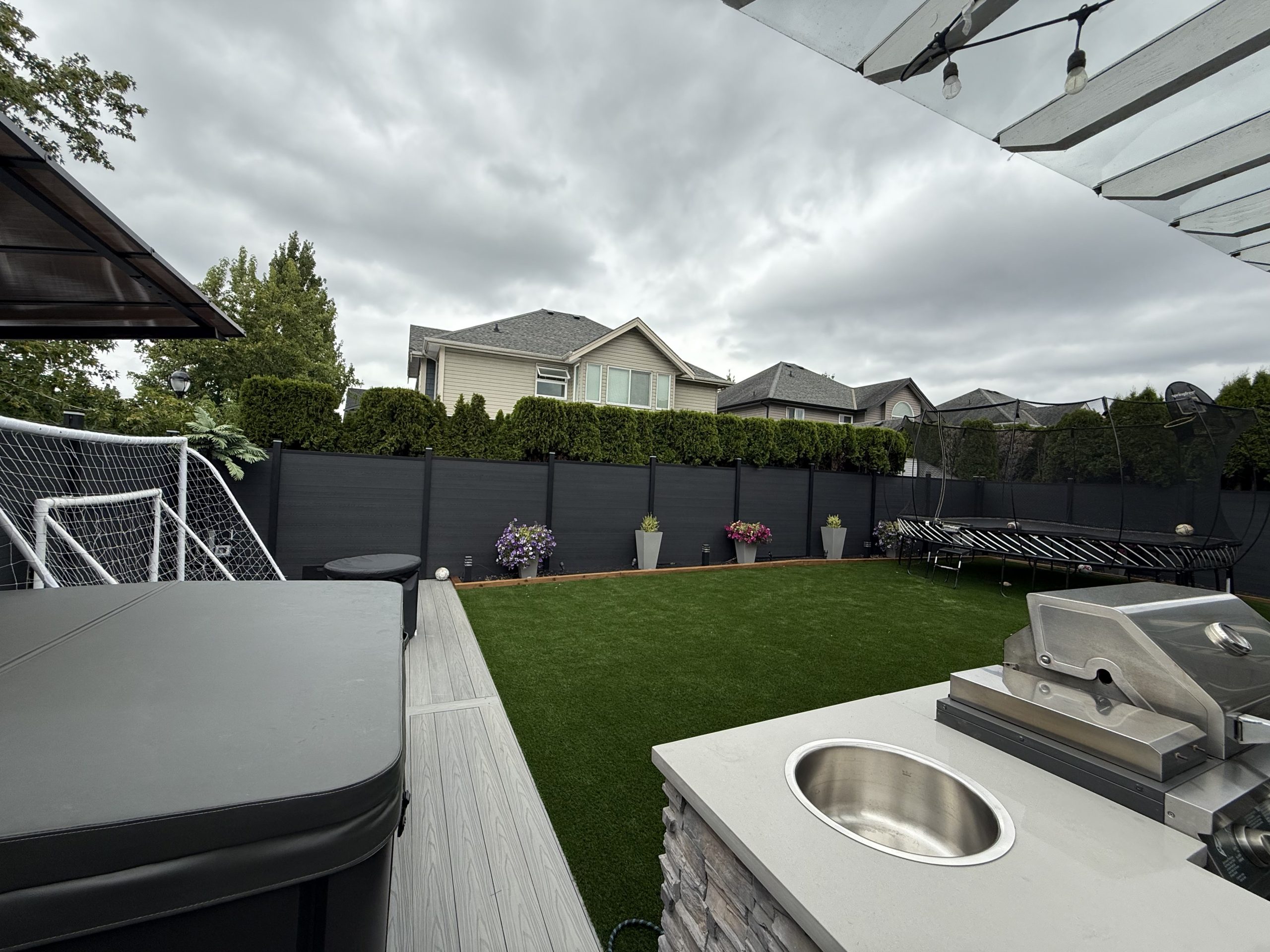
The advantage is straightforward: aluminum posts do not rot like wood posts, and composite boards do not follow the same stain/soften/warp cycle as cedar. The system is cleaner, more stable, and better suited for wet Lower Mainland yards where homeowners want privacy without rebuilding the same problem every few seasons.
Composite fencing pros
- Strong fit for Vancouver rain and shaded side yards.
- No cedar-style staining cycle.
- Modern privacy look with consistent colour options.
- Works well for backyards, laneways, townhouse lines, and side yards.
- Better long-term choice when multiple cedar posts are already failing.
Composite fencing cons
- Higher upfront cost than a basic cedar patch.
- Still needs proper post spacing, drainage, and installation.
- Poorly framed gates can still cause alignment problems.
- Over-height or complex layouts may need bylaw review.
For pricing, review our composite fence cost Vancouver guide. For installer selection, see composite fence installers Vancouver.
Quick Facts for Vancouver Homeowners
- Main warning sign: post movement over about 2 inches during a controlled push test.
- Most common failure zone: wood post base near soil, mulch, gravel, or concrete.
- Best time to inspect: spring, after winter rain and before summer wind/use.
- High-risk areas: gates, corners, long straight runs, lane-facing fences, shaded side yards.
- Replacement upgrade: aluminum post + composite board system.
- Quote shortcut: send fence length, photos, gate count, city, and push-test result.
Step-by-Step: What Happens After You Fail the Push Test?
- Send photos: include the full fence line, close-ups of post bases, gate area, and any leaning sections.
- Describe movement: tell us whether the post moved less than 1 inch, 1–2 inches, or more than 2 inches.
- Measure the run: rough linear footage is enough for first-stage planning.
- Count gates: gate posts carry extra load and affect cost.
- Confirm access: side-yard width, stairs, lane access, and parking all affect installation planning.
- Check rules: review whether you need a permit to build a fence in Vancouver and max fence height in Vancouver before choosing a height.
- Locate utilities: before any post digging, utility locates must be planned. Fence posts are not “small enough to ignore.”
- Get a written scope: repair, partial replacement, or full composite replacement should be priced clearly.
Pricing: Urgent Fence Repair vs Composite Replacement
Every yard is different, so these are planning assumptions, not a final quote.
| Scenario | Typical Scope | Planning Guidance |
|---|---|---|
| Single loose cedar post | Inspect, reset/replace post if surrounding fence is sound | Best only when the rest of the fence is still stable |
| Multiple rotten posts | Partial replacement or full side replacement | Often better than chasing repairs one post at a time |
| Failing gate post | Post, hinge, latch, and frame evaluation | Gate repairs need structure, not just hardware |
| Full composite upgrade | Old fence removal, aluminum posts, composite boards, gates if needed | Best long-term fix for repeated cedar failure |
If a gate is involved, review our custom composite fence gates. A strong fence with a weak gate is still a future service call.
DIY vs Pro: Should You Fix a Rotten Fence Post Yourself?
DIY can work if the fence is short, the soil is easy, the post is isolated, and you know where underground utilities are. But for Vancouver homeowners, DIY becomes risky when the fence is shared, leaning badly, tied into a gate, close to a retaining wall, or sitting along a lane or neighbour line.
Hire a professional when:
- The post moves more than 2 inches.
- More than one post is soft at the base.
- The fence is leaning toward a neighbour’s yard.
- The gate no longer closes properly.
- The fence line may be near gas, electrical, telecom, irrigation, or drainage services.
- You want to replace cedar with composite rather than patch the same failure point.
Local Availability
Maple Star Fencing serves Vancouver and Metro Vancouver, including East Vancouver, West Side Vancouver, Burnaby, Richmond, Surrey, Coquitlam, Port Coquitlam, Port Moody, New Westminster, North Vancouver, and West Vancouver. We handle composite privacy fences, cedar replacement projects, aluminum post systems, gates, panels, and urgent fence safety inspections.
FAQs: Rotting Fence Posts Vancouver
1. How do I know if my cedar fence post is rotten?
Push the post gently and check the base. If it moves more than about 2 inches, feels soft at the soil line, crumbles when probed, or sounds hollow, the post may be rotten or structurally weak.
2. Is a loose fence post dangerous?
Yes, especially if the fence borders a neighbour, lane, walkway, driveway, or children’s play area. A loose post can turn a normal wind event or small impact into a full fence collapse.
3. Can I just replace one rotten post?
Sometimes. If the rest of the fence is straight and solid, a single-post repair may work. If several posts are soft or the fence line is leaning, partial or full replacement is usually more cost-effective.
4. How long does a cedar fence last in BC?
Cedar lifespan depends on drainage, staining, exposure, build quality, and soil contact. In wet Vancouver yards, poorly maintained cedar can fail much earlier than homeowners expect, especially at the post base.
5. Is composite fencing better than cedar in Vancouver?
For homeowners who want privacy, low maintenance, and better wet-climate durability, composite is often the stronger long-term choice. Cedar can look good, but it requires ongoing maintenance and is more vulnerable at ground-contact points.
6. Do aluminum fence posts rot?
No, aluminum does not rot like wood. It still needs the right specification and installation method, but it avoids the core cedar-post problem: organic material sitting in wet soil.
7. Do I need a permit to replace my fence in Vancouver?
Many standard residential fences do not need a permit if they stay within typical height and location rules, but over-height fences, corner lots, retaining-wall combinations, and strata properties need extra review. Start with our Vancouver fence permit guide before setting posts.
8. What should I send for a fast inspection or quote?
Send photos of the full fence line, close-ups of the post bases, gate photos, rough length, city, desired height, and whether the post moved less than 1 inch, 1–2 inches, or more than 2 inches during the push test.
Once you know which posts are gone, the next question is whether the fence is worth saving at all. We cover that here: how to tell if your Vancouver fence is worth fixing.
Book a Free Urgent Fence Inspection
If your cedar fence failed the Push Test, do not wait for it to fall before asking for help. Maple Star Fencing can inspect the fence, explain whether repair or replacement makes financial sense, and quote an aluminum post + composite board system built for Metro Vancouver’s wet climate.
Failed the Push Test? Book a free urgent fence inspection today.
Service note: Maple Star Fencing | Hanyu Construction Inc. provides installer-practical composite fencing guidance for Metro Vancouver homeowners. Last updated: May 13, 2026.
