
Aluminum vs. Vinyl vs. Composite Fences: Which Is Best for BC’s Wet Climate?
Planning a new fence in Vancouver, Burnaby, Richmond, Surrey, Coquitlam, North Vancouver, or West Vancouver? Start with Maple Star’s core pages for Composite Fence Company Vancouver, Composite Fence Installers Vancouver, and Composite vs Vinyl vs Wood Fence in Vancouver Rain.
Quick Answer: Best Fence Material for BC Rain
If the job is a front-yard decorative boundary, aluminum can be a smart option. If the job is a short, budget-conscious side run and privacy is not the main concern, vinyl may work if the product is high-quality and installed correctly. If the job is a backyard privacy fence, laneway screen, strata fence, pet boundary, or long-term residential upgrade, composite fencing is usually the better investment for BC’s rain-heavy environment.
Composite fencing is made from a blend of wood fibres and polymer materials. In practical terms, it is designed to offer the visual warmth of wood without the same level of staining, rotting, splintering, or repainting. For homeowners comparing long-term value, Maple Star’s Composite Fence Cost Vancouver guide is the next page to read before asking for quotes.
Quick Facts: BC Fence Material Comparison
- Best for privacy: Composite or masonry.
- Best for open-view front yards: Aluminum.
- Lowest maintenance: Composite, aluminum, and quality vinyl all beat wood.
- Biggest approval headache: Masonry walls, retaining walls, over-height fences, and corner-lot visibility conditions.
- Most common vinyl risk: Impact cracking in cold weather or with lower-grade panels.
- Best overall BC wet-climate balance: Composite fencing.
- Safety note: Before digging fence posts, request a utility locate through BC 1 Call.
Comparison Table: Aluminum vs Vinyl vs Composite vs Masonry
| Material | Privacy | Rain Performance | Cold/Impact Risk | Maintenance | Best Use |
|---|---|---|---|---|---|
| Aluminum | Low unless combined with panels/screens | Good if powder-coated properly | Can dent or bend under impact | Low | Front yards, pools, decorative boundaries, open-view fencing |
| Vinyl / PVC | Medium to high depending on panel style | Good moisture resistance | Lower-grade vinyl can become brittle or crack under cold impact | Low | Simple privacy runs where appearance and impact resistance are not the top priority |
| Composite | High | Excellent when installed as a full system | Better impact feel than thin vinyl; requires proper posts and gates | Low | Backyard privacy, laneways, strata, modern homes, long-term value |
| Masonry / Brick / Concrete Wall | Very high | Excellent if engineered and drained correctly | Low material impact risk, but cracking/settlement risk exists | Low to medium | Luxury properties, retaining structures, sound barriers, high-security boundaries |
Aluminum Fencing: Strong, Clean, but Weak on Privacy
Aluminum fencing has legitimate strengths. It is lightweight, clean-looking, resistant to rust when powder-coated, and useful for front yards, pool perimeters, garden boundaries, and properties where the owner wants an open view. In wet BC weather, quality aluminum is not automatically a bad choice.
The problem is privacy. Most aluminum fences are picket-style or railing-style. That means your neighbour, pedestrians, tenants, delivery drivers, and laneway traffic can still see through the fence. For a decorative boundary, that is fine. For a Vancouver backyard, basement suite patio, hot tub area, dog run, or side-yard privacy screen, it fails the core homeowner intent.
There is also a design mismatch. Many Metro Vancouver homeowners now want matte black, charcoal, walnut, grey, or modern privacy panels that match composite decks, stucco homes, laneway houses, and contemporary renovations. Standard aluminum can look too commercial or too exposed unless it is combined with infill panels, privacy slats, or custom screening. At that point, cost and complexity rise.
Best verdict: aluminum is a good material for visibility and boundary control, but not the best answer when the search intent is “private backyard fence in BC rain.”
Vinyl / PVC Fencing: Moisture-Resistant but Not Bulletproof
Vinyl fencing is popular because it does not absorb water like wood. It does not need staining, and it can look clean when new. For some homeowners, that is enough.
But in BC, the issue is not only rain. Fences face wet soil, wind, falling branches, bikes, bins, lawn equipment, dogs, kids, winter cold snaps, and freeze-thaw cycles. Thin or lower-quality vinyl can crack when it is hit in cold weather. Better vinyl products are engineered to handle cold better, but the homeowner still has to know what grade, thickness, reinforcement, and post strategy they are buying.
Vinyl also has an aesthetic ceiling. White PVC can look bright and plastic against West Coast homes, especially beside cedar, stone, dark siding, black window frames, or modern composite decking. Darker vinyl options exist, but quality, fade resistance, and structural performance vary by supplier.
If you are comparing vinyl directly against composite, read Maple Star’s deeper guide: Composite vs Vinyl vs Wood Fence in Vancouver Rain. That article breaks down the wet-climate problem in more detail.
Best verdict: vinyl can work, but it is not the strongest premium privacy choice for homeowners who want a modern look, better impact confidence, and a more substantial fence system.
Masonry and Brick Walls: Excellent Privacy, but Usually Overkill
A brick, stone, or concrete wall gives excellent privacy and strength. If the budget is high, the property is luxury-grade, and the wall is properly engineered, masonry can be the most permanent-looking option.
The problem is total project friction. Masonry is expensive. It may require engineering, drainage planning, footing work, retaining-wall coordination, and more municipal review than a standard fence. In Vancouver, standard residential fence height rules already need to be respected, and over-height or retaining-wall combinations can create extra approval issues. Homeowners should check the City of Vancouver fence and wall guidance before assuming a wall is simple.
For most homeowners, masonry solves the privacy problem but creates a budget problem. It is a strong answer for specific high-end or structural situations, not the practical default for a backyard privacy upgrade.
Best verdict: masonry wins on permanence and privacy, but loses on cost, approval complexity, speed, and flexibility.
Composite Fencing: The Best Balance for BC’s Wet Climate
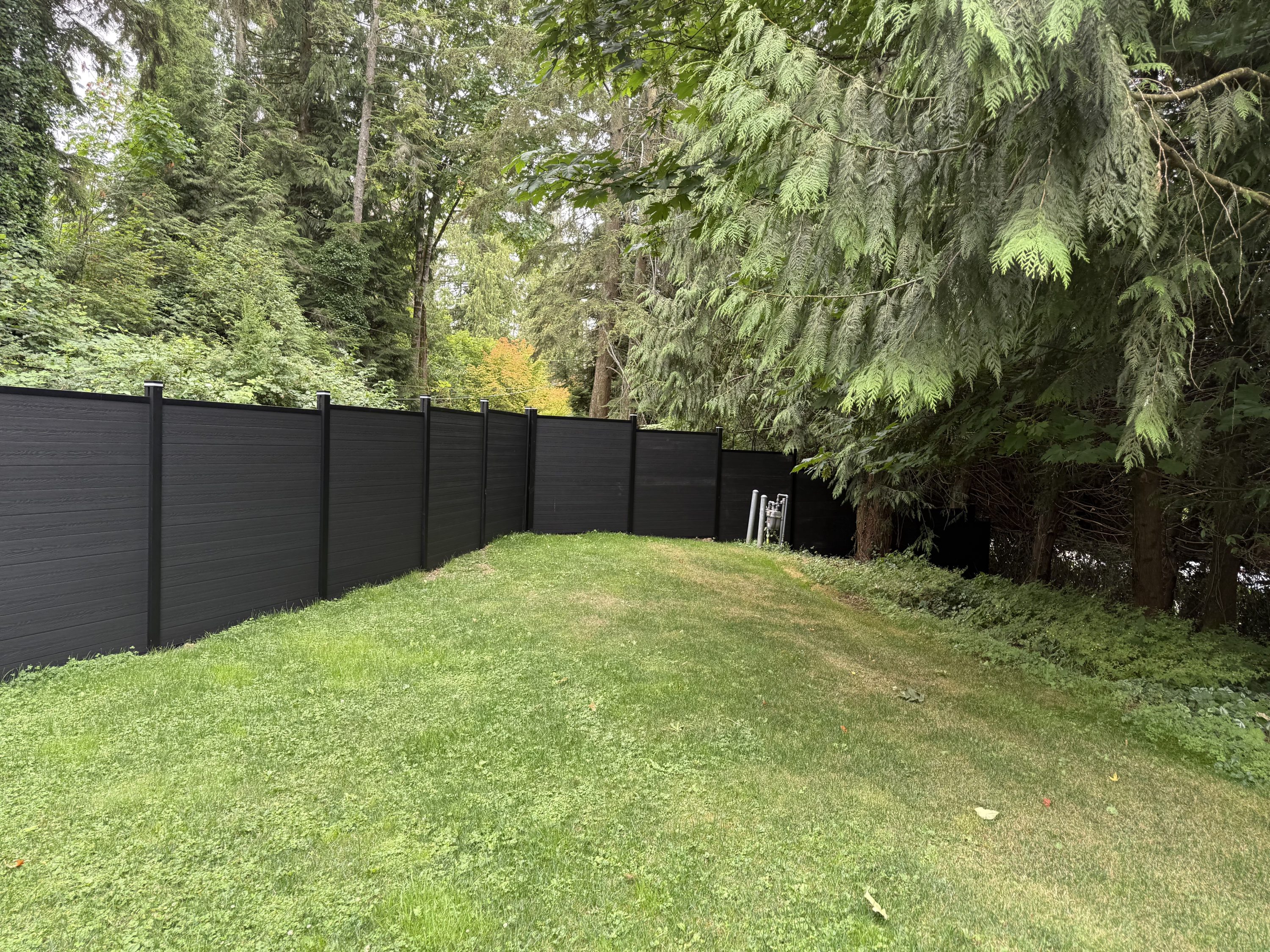
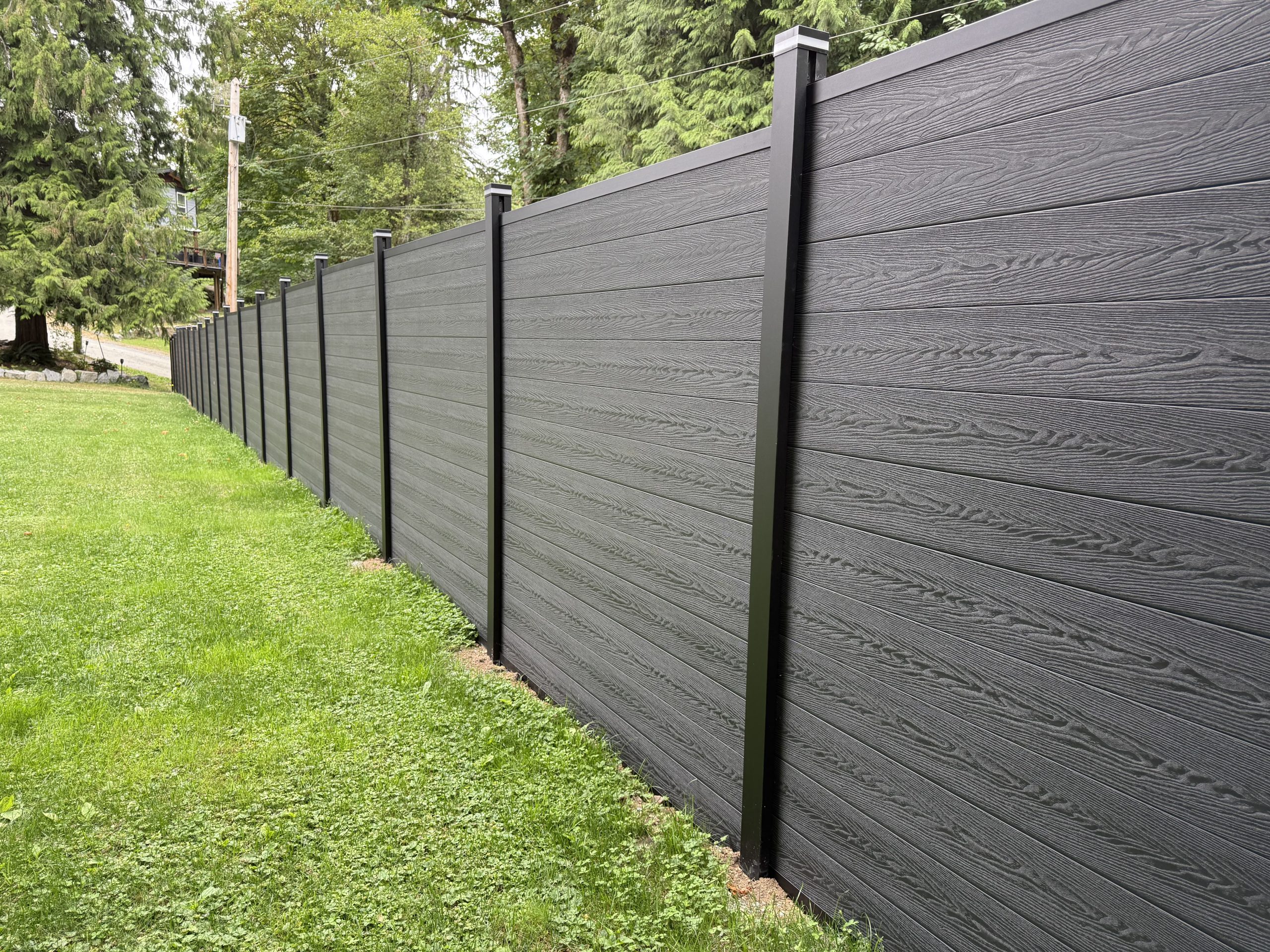
Composite fencing wins because it solves more of the actual homeowner problem at once. It provides privacy like a solid fence, handles wet weather better than wood, avoids the overly plastic look of many vinyl fences, and costs far less than masonry or concrete walls.
For Vancouver, Burnaby, Richmond, Surrey, and Coquitlam properties, the key advantage is system thinking. A good fence is not just panels. It is posts, channels, caps, gates, hardware, slope transitions, layout, and drainage awareness. Maple Star supplies composite panels, matching posts, gate systems, and contractor-friendly packages through pages like Maple Star Shop, Metro Vancouver Composite Gates, and Fence Contractors Vancouver: Composite Fences & Gates.
Composite is not magic. Posts still need to be set correctly. Gates still need reinforced frames and proper hinges. Sloped yards still need layout planning. Retaining walls still need coordination. But once those fundamentals are handled, composite gives homeowners the privacy, look, and long-term maintenance profile they usually wanted from wood, without wood’s recurring upkeep cycle.
Best verdict: for most BC privacy fence projects, composite is the highest-value middle path between cheap short-term materials and expensive permanent walls.
Pros and Cons by Material
Aluminum Fence Pros
- Low maintenance when powder-coated properly.
- Good for front yards, pools, and open-view boundaries.
- Does not rot like wood.
- Lightweight and clean-looking.
Aluminum Fence Cons
- Usually poor privacy.
- Can feel more like railing than fencing.
- Can dent or bend under impact.
- Privacy upgrades increase cost.
Vinyl Fence Pros
- Moisture-resistant.
- Low maintenance.
- Available in privacy panel styles.
- Often cheaper than premium composite or masonry.
Vinyl Fence Cons
- Can look plastic, especially in white panels.
- Lower-grade panels can crack under cold-weather impact.
- Repair matching can be difficult if profiles change.
- Not always the best fit for modern West Coast homes.
Composite Fence Pros
- High privacy.
- Strong wet-climate performance.
- Modern colours and wood-look finishes.
- Low maintenance compared with cedar or pressure-treated wood.
- Works well for homeowners, builders, strata projects, and contractors.
Composite Fence Cons
- Higher upfront material cost than basic wood or cheap vinyl.
- Requires proper post spacing and installation.
- Gate quality depends on frame, hinge post, and hardware strategy.
- Cheap composite products should be avoided.
Pricing Reality: What Should BC Homeowners Budget?
Fence pricing depends on linear footage, height, access, demolition, slope, gates, post conditions, retaining walls, and product grade. Basic materials may look cheaper at first, but the installed cost changes once labour, disposal, gate hardware, and future maintenance are counted.
For Vancouver composite fencing, Maple Star publishes real planning ranges on Composite Fence Cost Vancouver and a more detailed installed-cost breakdown on True Cost of Composite Fence Installation Vancouver 2026. Those two pages should be internally linked from this article because they catch users moving from material comparison into purchase intent.
| Buyer Priority | Best Material Direction | Reason |
|---|---|---|
| Lowest upfront cost | Basic vinyl or wood | Lower initial spend, but higher risk of compromise |
| Maximum privacy | Composite or masonry | Solid panels block sightlines better than picket-style aluminum |
| Luxury permanent boundary | Masonry | Strong but costly and approval-heavy |
| Modern low-maintenance backyard fence | Composite | Best balance of privacy, durability, design, and lifecycle value |
Step-by-Step: How to Choose the Right Fence for BC Weather
- Define the job: privacy, pets, pool boundary, front-yard curb appeal, strata replacement, or laneway screening.
- Check visibility needs: if privacy matters, aluminum should drop lower on the list.
- Assess exposure: shaded side yards, rain-heavy backyards, coastal air, and wet soil all increase material stress.
- Confirm height rules: check municipal guidance, especially in Vancouver front yards, corner lots, and retaining-wall conditions.
- Plan posts and gates: most fence failures begin at posts and gates, not the centre of a panel.
- Request a utility locate: contact BC 1 Call before digging post holes.
- Compare lifecycle cost: include maintenance, repainting, staining, gate repairs, and replacement risk.
- Choose the material: use aluminum for open-view boundaries, masonry for high-end structural walls, vinyl for simple low-maintenance projects, and composite for premium privacy fencing.
DIY vs Professional Installation
A simple fence run can be DIY-friendly if the yard is flat, the property line is clear, and the homeowner understands post layout. Maple Star’s DIY Composite Fence Panels Vancouver guide is useful for homeowners who want to understand the process before deciding.
Hire a professional when the project includes gates, slopes, retaining walls, tight laneways, strata approvals, concrete removal, unclear lot lines, or shared neighbour boundaries. Those conditions create hidden risk. The cheapest quote is not cheap if the fence leans, the gate drags, or the panels no longer align after the first wet winter.
For contractor-led projects, use Fence Contractors Vancouver: Composite Fences & Gates. For supply-and-install planning, start with Composite Fence Installers Vancouver.
Need a Fence That Actually Fits BC Weather?
Maple Star Fencing supplies and installs modern composite fence systems across Metro Vancouver. If you are comparing aluminum, vinyl, masonry, and composite, we can help you choose the material that matches your privacy needs, budget, property layout, and long-term maintenance expectations.
Get a practical recommendation before you overpay for the wrong material.
Call Maple Star Fencing: 778-318-8578
Request a Composite Fence Quote
View Recent Composite Fence Projects
FAQ: Aluminum, Vinyl and Composite Fences in BC
Is aluminum fencing good for BC rain?
Yes, quality powder-coated aluminum can perform well in BC rain. The bigger issue is privacy. Most aluminum fences are open picket-style fences, so they are better for boundaries and visibility than backyard privacy.
Is vinyl fencing good for Vancouver?
Vinyl can work in Vancouver because it resists moisture. However, thin or low-quality PVC panels can crack under cold-weather impact. Product grade, post strength, panel thickness, and installation quality matter.
Is composite fencing better than vinyl?
For premium backyard privacy in Metro Vancouver, composite is usually better. It feels more substantial, looks less plastic, offers strong privacy, and fits modern West Coast homes better than many white PVC systems.
Is brick or concrete better than composite?
Brick or concrete can be stronger and more permanent, but it is also much more expensive and may require more complex approvals, footing work, drainage planning, or engineering. Composite is usually the better value for residential privacy fencing.
Which fence gives the most privacy?
Masonry and solid composite panels provide the strongest privacy. Aluminum is usually the weakest privacy option unless it is modified with screens or privacy inserts.
What fence material is best for a wet backyard?
Composite is a strong choice for wet backyards because it avoids the rot and staining cycle of wood while providing better privacy and a more premium look than many vinyl options.
Do I need to call before digging fence posts?
Yes. Before digging post holes, homeowners and contractors should request utility locate information through BC 1 Call to reduce the risk of damaging underground services.
What is the best fence material for Metro Vancouver resale value?
For many homes, a clean modern composite fence gives better curb and backyard appeal than aging wood or basic white vinyl. It also supports a low-maintenance selling story, which matters to buyers.
