
Does Composite Fencing Warp, Expand, or Crack in BC Weather?
TL;DR: In Metro Vancouver’s wet winters and warm summer sun, quality composite fencing will expand/contract slightly (that’s normal), but it should not warp or crack when it’s installed with proper post footings, drainage clearance, and “floating” board details. Most problems blamed on “bad composite” are actually installation or framing issues.
Spring promotion: Limited spring install slots—20% off qualifying composite fence packages. Call/Text (778) 318-8578 for a fast quote.
Composite Fence Definition (Plain Language)
Composite fencing uses engineered boards made from a blend of polymers and wood fibres (or similar composites) to create a fence that looks like wood but avoids the constant sanding/staining cycle—especially helpful in Vancouver’s rain. If you’re comparing panel styles, colours, and hardware, start here: Composite Fence Supplier Vancouver.
Quick Facts for Vancouver Homeowners
- Yes, composite boards move a little with temperature (expand/contract). Good systems are designed for it.
- Warping is usually caused by post movement, poor spacing, or boards locked in too tight—not “BC rain.”
- Cracking is uncommon in quality composite; it’s typically tied to impact, extreme cold + stress points, or bargain-grade material.
- In Vancouver, the real enemy is water management: soil contact, trapped debris, and constant wetting at the bottom rail.
- Best practice: use a system with rigid posts/frames and correct fasteners—then let the boards “float” where intended.
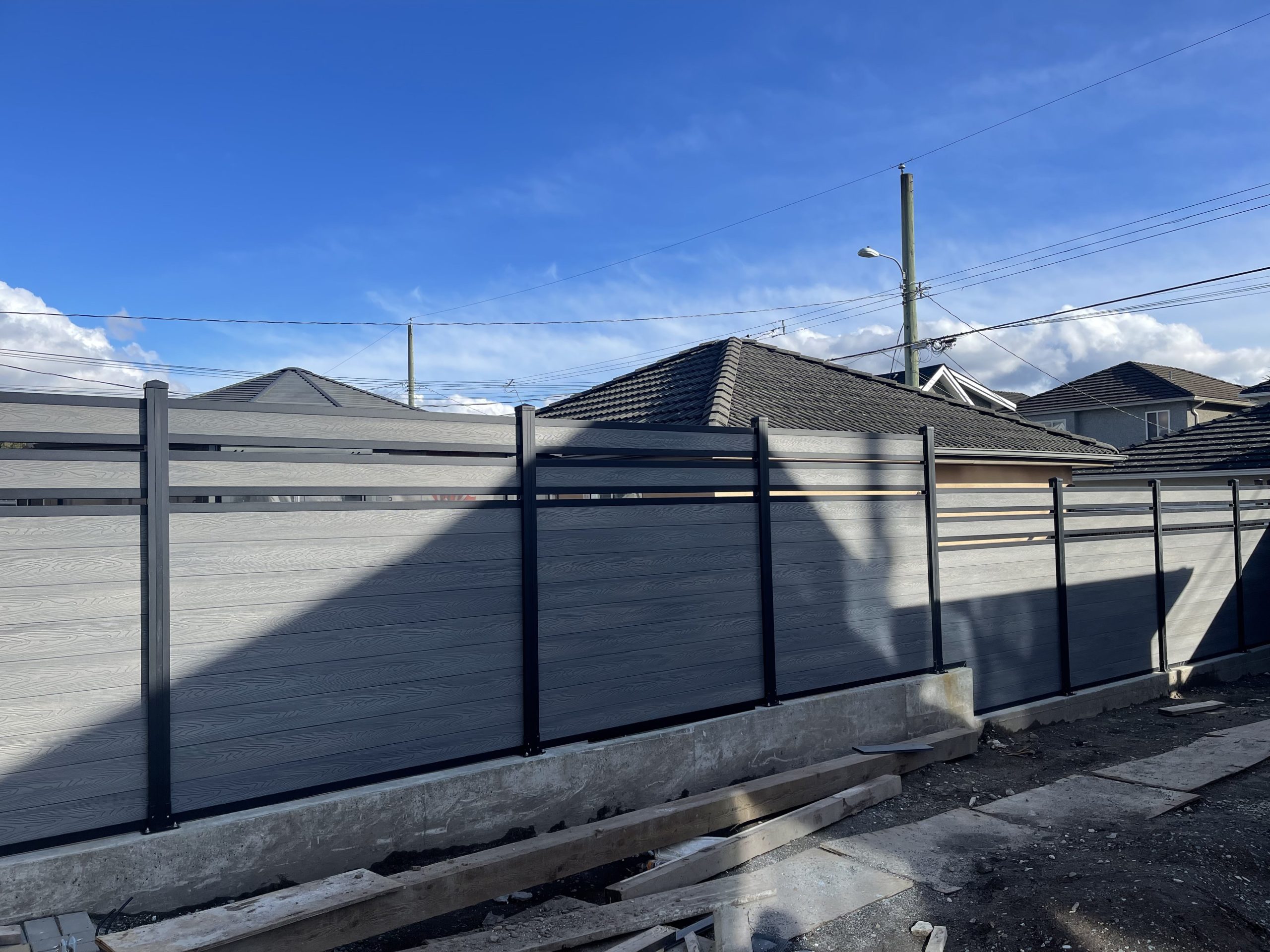
BC Weather: What Actually Stresses a Fence?
Metro Vancouver isn’t “prairie winter,” but it is one of Canada’s toughest regions for outdoor builds because of:
- Long wet season (consistent moisture + organic debris film).
- Freeze-thaw pockets (especially where drainage is poor or soil stays saturated).
- Summer heat + UV (dark colours can get hot, which increases expansion).
- Coastal exposure (wind-driven rain; salt air near the water can accelerate corrosion in cheap hardware).
This is why our installs focus on footing depth, straight post lines, and drainage clearance. For a practical overview of how we build for local conditions, see: Fence Contractors in Vancouver (Composite Fences & Gates).
1) Will Composite Fencing Warp in BC Weather?
Well-made composite panels are engineered to resist warping—but here’s the key: a fence is a system (posts + frames + rails + boards). If the system is weak, any material will look “warped.”
What “Warping” usually is in Vancouver
- Leaning posts from shallow footings or soft, wet soil.
- Racking (the whole panel becomes a parallelogram) from poor bracing or corner layout.
- Wavy sight lines from inconsistent post spacing on slopes or retaining walls.
- Board bowing caused by boards being fastened too rigidly (no movement allowance).
Installer tip (real-world): If you’re seeing a “banana” effect, the first thing we check is post plumb and rail alignment, not the board surface. On sloped Vancouver lots, the fence must be planned as a series of true lines—then stepped or racked intentionally. If you want to understand what drives straightness and durability, review our install approach: Composite Fences Installation Vancouver.
2) Does Composite Fencing Expand or Shrink?
Yes. Composite moves with temperature. The difference is that a properly designed composite fence expects movement and builds it in—so your fence stays straight and tight-looking.
What you should expect (normal behaviour)
- On hot summer afternoons (especially with dark colours), boards can expand slightly.
- In cool evenings and winter, boards contract slightly.
- That movement is why quality systems use channels, rails, and recommended gaps—so boards aren’t “locked” and forced to deform.
How we prevent expansion from becoming a problem
- Correct post spacing so panels aren’t over-compressed.
- Proper end clearance in rails/channels (boards slide microscopically instead of pushing).
- Fasteners done right (no over-tightening that pinches boards and creates stress points).
- Rigid structure (aluminum/engineered posts and frames) so movement happens where it’s supposed to—inside the panel—not as a lean.
If you’re shopping components (boards, rails, posts, caps), our factory-direct sets are here: Composite Fence Panels (Panel Sets) and Composite Fence Gates & Posts Vancouver.
3) Will Composite Fencing Crack in BC Winters?
Cracking is not typical for quality composite fencing in Vancouver’s climate—but it can happen under specific conditions. Think of cracking like this: it’s usually impact + stress, not “rain.”
Most common reasons composite cracks
- Impact damage (lawn equipment, thrown objects, vehicle bump at lane line).
- Boards installed too tight with zero movement allowance; stress concentrates at ends/fasteners.
- Low-grade boards with poor formulation or inconsistent extrusion.
- Cold snap + load (rare here, but possible if the board is under tension).
Buyer checklist: Ask whether the boards are capped/co-extruded (better stain and fade resistance), what the warranty covers, and whether the fence uses structural posts that won’t twist over time. If you want a low-maintenance plan for our wet season, read: Prevent Green Algae on Composite Fences in Shaded Vancouver Yards.
What Vancouver Homeowners Should Require From Any Installer
Before you sign off, make sure your installer can answer these—clearly:
- Utility locate: “Do you arrange or confirm BC 1 Call before digging?” (You should.)
- Footing depth and diameter: “What depth are you using for my soil and exposure?”
- Drainage clearance: “How much gap will you leave between the bottom board and soil/hardscape?”
- Panel engineering: “Do boards float in channels, or are they hard-fastened?”
- Hardware quality: “What fasteners are used for coastal exposure?”
- Bylaw awareness: “Do you confirm fence height rules for my city and lot condition?”
- Slope handling: “Are you stepping the fence, racking panels, or custom-framing transitions?”
- Gate frame: “Is the gate frame built to prevent sag over time?”
- Workmanship warranty: “What’s covered if a post shifts or a panel racks?”
- Clean finish: “How do you handle cut ends, caps, and expansion clearances?”
For Vancouver-specific permitting and height questions, here’s our practical guide: Do I Need a Permit to Build a Fence in Vancouver?
DIY vs Pro in Metro Vancouver
DIY can work if your yard is flat, you’re installing a short run, and you’re comfortable setting posts dead-straight in variable soil. Hire a pro when you have any of the following:
- Sloped lots (common in Vancouver, Burnaby, North Van)
- Retaining walls or tight property lines
- Wind exposure (open corners, lane lines)
- Gate openings that must stay square (driveways, side access)
- Strata requirements and inspection expectations
If you want a fast, clean scope and timeline, start with our install page: Composite Fences Installation Vancouver.
Cost Range (Realistic Vancouver Assumptions)
Composite fencing is a premium product, but it replaces years of staining and board repairs. Quotes for composite fencing in Metro Vancouver commonly land between $120 and $220 per linear foot installed. MapleStar runs $60–$80 per linear foot installed — because the panels come factory-direct rather than through a distributor, and the system installs faster than building every section from raw material on site. Height, slope, post and footing requirements, gates and access still move the final number either way. For a quick comparison against other materials, see: Vinyl vs Composite Fence (Vancouver).
Pricing disclaimer: Site conditions, access, soil, and municipal rules can change labour and materials significantly. The only accurate number comes from a site visit and written quote.
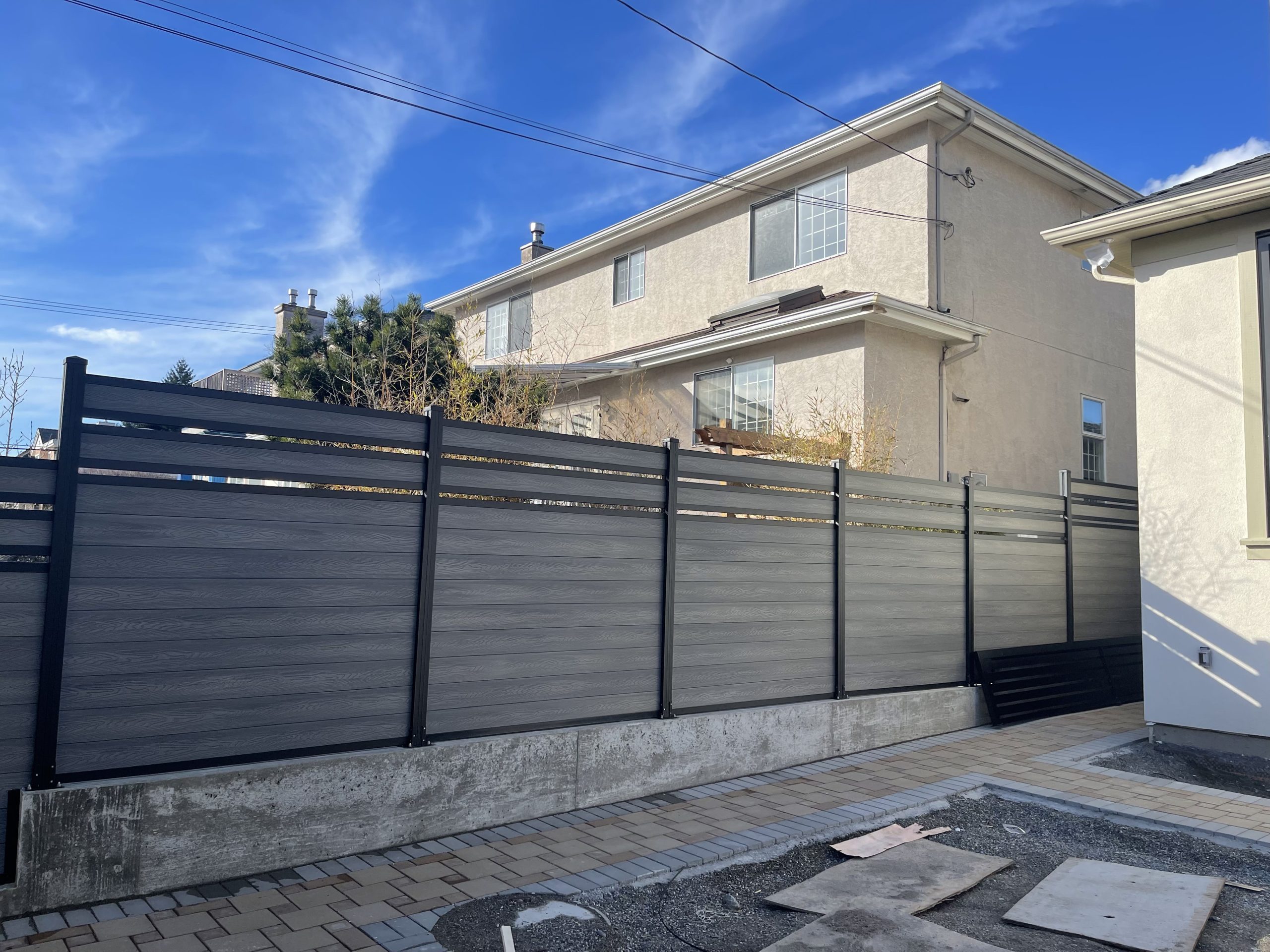
Local Proof: See Real Metro Vancouver Work
Want to see what straight lines and clean finishes look like in real neighbourhoods? Browse our recent installs here: Our Projects (Composite Fence Gallery).
FAQ: Composite Fence Warping, Expansion, and Cracking (BC Weather)
1) My neighbour’s composite fence looks wavy—why?
Most often it’s post movement, uneven post spacing, or boards locked too tight with no movement allowance. Composite doesn’t “absorb rain and twist” like wood, but a weak structure will still show distortion.
2) Should there be small gaps in composite fencing?
Yes—controlled clearances are normal and intentional so the system can handle seasonal temperature changes without building stress.
3) Does rain cause composite to swell?
Composite is designed to resist rot and moisture damage, but grime + organic film can build up on the surface in wet seasons. That’s a cleaning issue—not structural swelling.
4) Will dark composite colours expand more?
Darker colours can get hotter in direct sun, which can increase expansion. Good systems account for that with correct channel details and clearances.
5) Can I pressure wash composite fencing?
You can, but use a gentle approach. For many homeowners, a seasonal rinse plus mild soap and a soft brush is enough—especially after the rainy season.
6) What’s the best way to prevent algae and staining?
Keep vegetation off the fence, maintain bottom clearance from soil/mulch, and rinse the fence seasonally. Start here: Prevent Green Algae on Composite Fences in Shaded Vancouver Yards.
7) Do I need a permit for my fence height in Vancouver?
Sometimes, especially if you’re going over typical limits or have corner-lot visibility constraints. Read: Do I Need a Permit to Build a Fence in Vancouver?
8) How long should a composite fence last in BC?
Longevity depends on board quality, hardware, and (most importantly) post/footing and drainage details. A properly installed system is designed for long-term performance in wet coastal conditions.
Ready for a Quote? (Spring 20% Off)
If you want a composite fence that stays straight through rain, sun, and seasonal temperature swings, we’ll price it clearly and build it properly.
- Call/Text: (778) 318-8578
- Email: info@maplestarfences.ca
- Service area: Vancouver, Burnaby, Richmond, Surrey, Coquitlam, Port Coquitlam, Port Moody, New Westminster, Delta, Langley, Maple Ridge, Pitt Meadows, North Vancouver, West Vancouver, White Rock, and more across Metro Vancouver.
Helpful Resources
- Start here: Composite Fencing Vancouver (Maple Star Fencing)
- Installer-led supply + install: Composite Fence Supplier Vancouver
- Planning + height rules: Fence Permits in Vancouver
- MapleStar Fencing on Google (CID) (reviews, directions)
- Composite fencing near me (Metro Vancouver) (Google listing)
